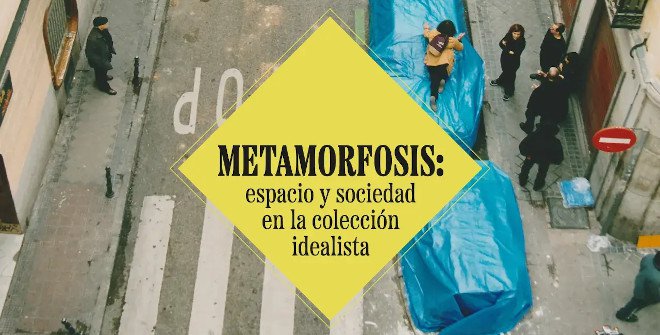
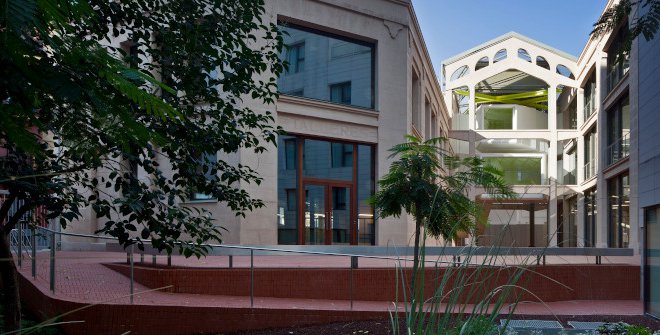
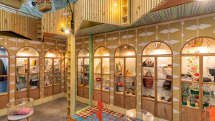
From 17 December to 8 March, the Espacio Cultural Serrería Belga is hosting an exhibition featuring a total of 58 artists from Europe, the Americas, Africa and Asia, showcasing a critical view of contemporary reality through photography and video art.
The exhibition consists of 120 pieces that belong to the Idealista collection, created 15 years ago, which includes works by seminal artists such as Teresa Margolles (Mexico, 1963), Cristina Lucas (Spain, 1973), Diana Larrea (Spain, 1972), Mladen Stilinovic (Serbia, 1947), Kiluanji Kia Henda (Angola, 1979) and Olaf Breuning (Switzerland, 1970), among others.
The exhibition explores territorial tensions, environmental footprints and the changing boundaries between public and private, areas in which the human spirit seeks to assert itself and transform its surroundings. In addition, some of the artwork on display has been awarded the Idealista Contemporary Art Prize, created in 2018 to recognise the talent of young visual artists.
Through four themed areas, the pieces on display demonstrate the changes in today's society and spaces. The first selection of works addresses the geographical tensions that run through inhabited places: scenarios where unfulfilled dreams, real estate development and economic impact converge. Artists like Teresa Margolles (Mexico, 1963), Adrian Melis (Cuba, 1985) and Liu Bolin (China, 1973) reflect on how urbanism, censorship and landscape transformation influence collective memory and ways of inhabiting.
The works included in the 'Environmental Paradoxes’ section examine the complex relationship between official iconography, advertising and the climate crisis, highlighting the tension between the utopia of progress and the reality of environmental impact. The works of artists such as Ramón Masats (Spain, 1931-2004), Panos Kokkinias (Greece, 1965) and Cecilia Paredes (Peru, 1950) become essential tools for analysing how contemporary urbanism shapes collective identity and transforms ecosystems.
'Everyday spaces', the title of the third thematic area, reflects how spaces that have often been relegated to routine or indifference acquire a symbolic dimension that reveals the playful and political aspects of daily life. Finally, the last section 'Human Archaeology' presents a perspective that goes beyond the passive observation of the environment, inviting us to explore the visible and invisible remains that make up inhabited spaces.